
Teeth don’t always follow the rules. Sometimes a canine just refuses to come in. You don’t feel it. You don’t see it. But under the surface, it can be wreaking havoc.
That’s where impacted canine surgery comes in. It is not only a matter of repairing a tooth. It is about guarding your bite, your smile, and preventing other teeth from being shoved about. Others start panicking when they hear of surgery. Others shrug and hope it goes away. Neither works.
It can be done by a good oral surgeon. They will plan it out and do it step-by-step, and straighten your teeth. Direct, straightforward, and nothing new.
So What the Heck Is an Impacted Canine?
Your canine teeth are those big pointy ones right beside your front teeth. Sometimes they are called “eyeteeth” because they sit under your eye, and they are super important for your bite and how your smile looks. Normally, they pop out somewhere between age 11 and 13.
But sometimes they don’t come in as they should. They can stay stuck in the jaw or gum and just sit there doing nothing. It is the name of an affected dog. This occurs due to a number of reasons, such as a lack of space in your mouth or the tooth forming in the wrong direction.
You might not even notice it at first because impacted teeth are often painless. Many people only find out when their oral surgeon spots it on X‑rays.
Why Canines Matter
Look, losing a front tooth does more than just look weird. It messes with how you chew and how your other teeth sit. Canines help guide your bite when you chew side to side, and they help keep the whole arch stable.
If an impacted canine just sits there doing nothing, a few things can happen:
- It can push on your other teeth and mess up their position
- It can damage the roots of nearby teeth over time
- Sometimes fluid‑filled sacs form around it
- Harder to keep clean, which can lead to gum problems or decay
These teeth are more important than most people think.
Impacted Canine Surgery Explained
When your oral surgeon talks about impacted canine surgery, they mean a surgical procedure to deal with that stuck tooth.
There are a few ways surgeons handle this depending on your situation, but here’s basically what happens:
- You get local anesthesia or sometimes sedation to stay relaxed
- The surgeon makes a small cut in your gum to access the tooth
- They might remove a bit of bone covering it if needed
- Often, a tiny bracket with a chain is attached to the tooth, so your orthodontist can gently pull it into place with braces
- The gum is stitched back up, and you go home the same day
This operation can be completed in less than an hour. Then you feed on soft food as the part heals.
Signs You Might Actually Need the Surgery
Not every impacted canine automatically needs surgery. But you want to take it seriously if:
- Your oral surgeon says it is blocking other teeth or crowding your mouth
- It is causing root damage or could in the future
- You have gum issues, pain, or risk of infection
- You are already getting braces and need the tooth in the right place
Orthodontists often catch this in teens, but adults can have it too. Crowding and damage do not go away on their own.
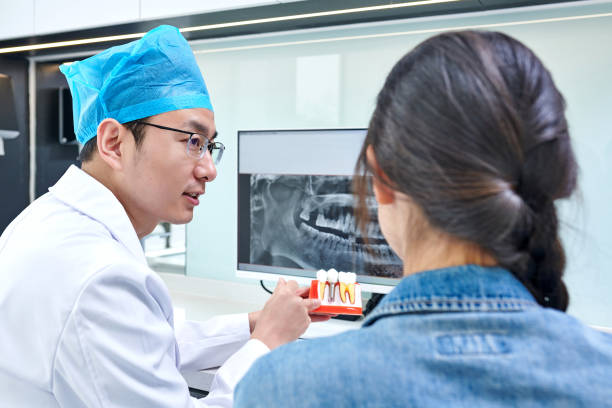
Side view of asian dentist and female patient discussing dental x-ray image and solution in dental’s office.
What If You Skip the Surgery?
Some people skip surgery because they are scared or just don’t want it. Here’s the reality:
In case the affected tooth is not problematic, your oral surgeon may recommend observing it. That is, frequent X-rays and checkups to ensure that nothing goes amiss.
But if there is crowding, pressure on other teeth, or the tooth is angled wrong, leaving it alone can cause:
- Root damage to nearby teeth
- Teeth shifting out of place
- More complicated orthodontic work later
- Risk of cysts or bone loss
For many people, dealing with the surgery is easier than fixing these problems later. Experienced oral surgeons see this all the time.
What to Expect After Surgery
Most people worry about healing and pain. Here’s the straight truth:
- You will be sore for a couple of days
- Ice helps with swelling
- Soft foods only at first, like soups, smoothies, mashed foods
- Take it easy for a day or two
- You may have stitches that dissolve or come out at your follow-up
Pain is usually mild to moderate and manageable with over-the-counter meds or what your oral surgeon prescribes. Most people are back to normal in a few days to a week.
Risks You Should Know About
Surgery always carries some risk, but major problems are rare:
- The bracket or chain might come loose and need reattachment
- Gum or bone healing might take longer than expected
- Damage to nearby teeth is uncommon but possible
The good news is most complications are minor and manageable with your oral surgeon’s care.
And What About Oral Pathology NYC?
If your oral surgeon mentions oral pathology in NYC, they are talking about checking out diseases of the mouth and jaw. It’s more than just a look. They’re spotting impacted canines, cysts, growths, or anything unusual that could cause problems later.
This evaluation gives your surgeon a clear picture, helps make a precise plan, and cuts down on surprises during surgery. You know what to expect, and nothing sneaks up on you.
Getting a proper diagnosis upfront makes the process smoother and safer.
Bottom Line
Bottom line, getting it checked early is key. Ignoring an impacted canine can lead to shifting teeth, root damage, or even cysts. It might feel scary, but the risks of doing nothing are way worse.
A trusted oral surgeon can handle this efficiently, safely, and with minimal fuss. They know what to look for, what to fix, and how to guide the tooth into place without creating bigger headaches later.
If you’re in New York, an evaluation at New York Oral & Facial Surgery that includes oral pathology in NYC ensures nothing is overlooked. Don’t wait. Get a clear plan, protect your smile, and take control today.
[Schedule Your Consultation Today]
FAQ
What exactly is impacted canine surgery?
It’s when an oral surgeon deals with a canine stuck in your jaw. It could mean exposing it, sometimes removing it, and preventing future chaos in your mouth.
Will recovery be painful?
You’ll be sore, yeah. Ice helps, soft foods help, and a few days of taking it easy usually do the trick. Most people bounce back fast.
What can go wrong?
Not so much when your surgeon is aware of what he is doing, there is swelling, slight bleeding, or slow healing at some time, but it is controllable, and normally nothing severe.
How do I know if I really need it?
If the tooth is pushing on others, blocking your bite, or causing risk, your oral surgeon will flag it. They’ll tell you straight—no guesswork.